NASA's Mars Rover Just Got Smarter Than Its Engineers
NASA's latest Mars rover can navigate autonomously using AI - making decisions faster than mission control could ever respond.
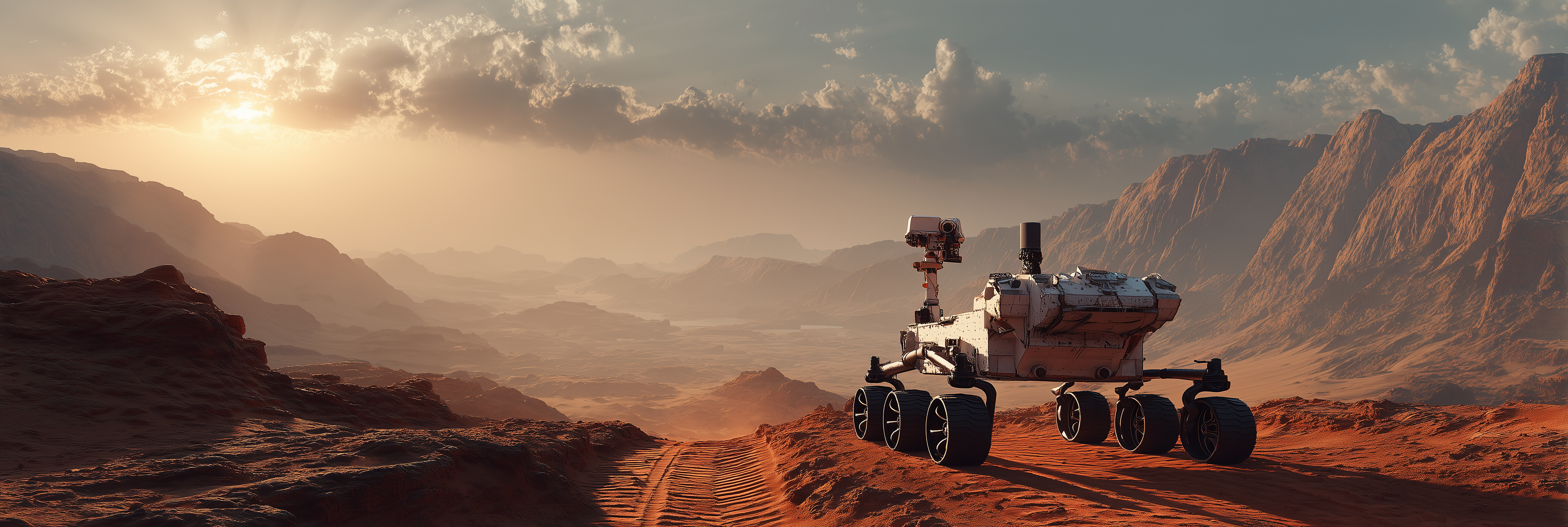
NASA's latest Mars rover has achieved autonomous navigation using onboard AI. It can now plan routes, avoid obstacles, and make real-time decisions without waiting for commands from Earth.
This is a bigger deal than it sounds.
The Light-Speed Problem
Mars is far away. Depending on orbital positions, radio signals take between 4 and 24 minutes to travel between Earth and Mars. That means every command sent to a rover has a minimum 8-minute round-trip delay.
If the rover encounters an unexpected obstacle, it can't just ask mission control what to do. By the time the question reaches Earth and the answer comes back, the rover could have driven off a cliff (or at minimum, wasted precious operational time sitting idle).
Previous rovers dealt with this through extreme caution. Move slowly. Stop frequently. Send images back to Earth. Wait for human analysis. Proceed conservatively.
It worked, but it was painfully slow.
The AI Solution
The new system uses computer vision and pathfinding AI trained on Martian terrain data. The rover can:
- Identify obstacles (rocks, slopes, soft sand) in real-time
- Evaluate multiple route options and pick the safest path
- Assess risk and make go/no-go decisions autonomously
- Adjust plans based on what it encounters
Humans still set high-level goals ("investigate that crater"), but the rover handles tactical execution itself.
Result? Faster exploration, more ground covered, better science return per mission day.
Why This Matters Beyond Mars
Autonomous navigation under communication constraints isn't just a Mars problem. It's relevant for:
Deep space missions. Once you get past Mars, communication delays get even worse. Missions to Jupiter or Saturn moons need full autonomy. Disaster response on Earth. When communication infrastructure is down (earthquakes, floods), autonomous systems that can operate without constant connectivity become valuable. Military applications. Obviously. Autonomous systems that don't need real-time human oversight are of considerable interest to defence sectors globally.The Trust Problem
Here's the uncomfortable question: at what point does "autonomous decision-making" become "we're not really in control anymore"?
NASA's rover operates in an environment where the stakes are relatively low. If it makes a bad call, you lose some science data and possibly a multi-billion-dollar robot. Not ideal, but not catastrophic.
But the same AI principles - operate independently, make real-time decisions, adapt to unforeseen circumstances - scale to systems where mistakes have much higher costs.
Self-driving cars. Autonomous weapons. Critical infrastructure management. We're building systems that are too fast and too complex for meaningful human oversight, and we're doing it because the alternative (slow, manual control) isn't competitive.
The Mars rover is a proof of concept. The question isn't whether the tech works - it clearly does. The question is where else we deploy it, and what happens when it makes a decision we wouldn't have made.